iERC20 协议再受关注:与知名链游合作,Ethi 站上风口
项目方规划将 PoW 的公平挖矿模式引入到 IERC20 协议当中,并积极与其他项目合作发射铭文。
撰写:深潮 TechFlow
11 月 13 日,iERC20 协议官方宣布与 Binance 孵化的 GameFI 项目 Sparkle 合作,Sparkle 称将在 IERC20 上引入 Inscription NFT 和其他 Inscription 资产,利用 Inscription 的优势升级 GameFi 生态系统中的游戏玩法。
这次合作吸引了众多关注目光,从 ETHS 的独角戏中将焦点移向…
项目方规划将 PoW 的公平挖矿模式引入到 IERC20 协议当中,并积极与其他项目合作发射铭文。
撰写:深潮 TechFlow
11 月 13 日,iERC20 协议官方宣布与 Binance 孵化的 GameFI 项目 Sparkle 合作,Sparkle 称将在 IERC20 上引入 Inscription NFT 和其他 Inscription 资产,利用 Inscription 的优势升级 GameFi 生态系统中的游戏玩法。
这次合作吸引了众多关注目光,从 ETHS 的独角戏中将焦点移向了 iERC20。
IERC20 是一种基于以太坊的代币协议,它在不影响现有基础设施的情况下为以太坊用户提供低成本的代币生态系统。任何人都可以在 IERC20 上部署他的代币、铸造代币和交易代币。而$Ethi ,就是 IERC20 生态系统中的第一个代币,并且受到官方支持。
两种协议并不冲突,共同在以太坊上发展,壮大以太链铭文生态。
从索引上来看,Ethi 的索引通过零地址和部分特殊地址进行基准方法索引,能提升检索区块的效率,让更多人都能参与到索引贡献中并支持 Deploy,Mint,Proxy transfer,Freeze Sell 等功能。
iERC20 的独特之处不仅在于 Swap 的开发,更在于其集成了 EVM 跨链功能,搭建了以太铭文与传统 Layer2 之间的通道,引入了更多主流币和稳定币,扩大了铭文生态的 TVL,为整个系统提供了更多可能性。
除此之外,项目方规划将 PoW 的公平挖矿模式引入到 IERC20 协议当中,并积极与其他项目合作发射铭文,和 Atom 协议挖法类似,引领以太生态 Launchpad 的新模式。
虽然,$Ethi 几乎是跟$ETHS 同一个时期出现,但远没有$ETHS 出名,在早期也没有迎来太大的涨幅。这是因为项目方一直在闷声开发,在诞生之时就实现了铭文可拆分技术。
尽管$Ethi 与$ETHS 几乎同时亮相,但由于项目方一直低调开发,早期并未取得显著涨幅。然而,在 $ETHS 走红后,$Ethi 逐渐崭露头角,也随之经历了上涨。相对于 ETHS,$Ethi 的可拆分技术使其更适合散户投资者,但市值仍与$ETHS 存在较大差距,如下对比图所示:
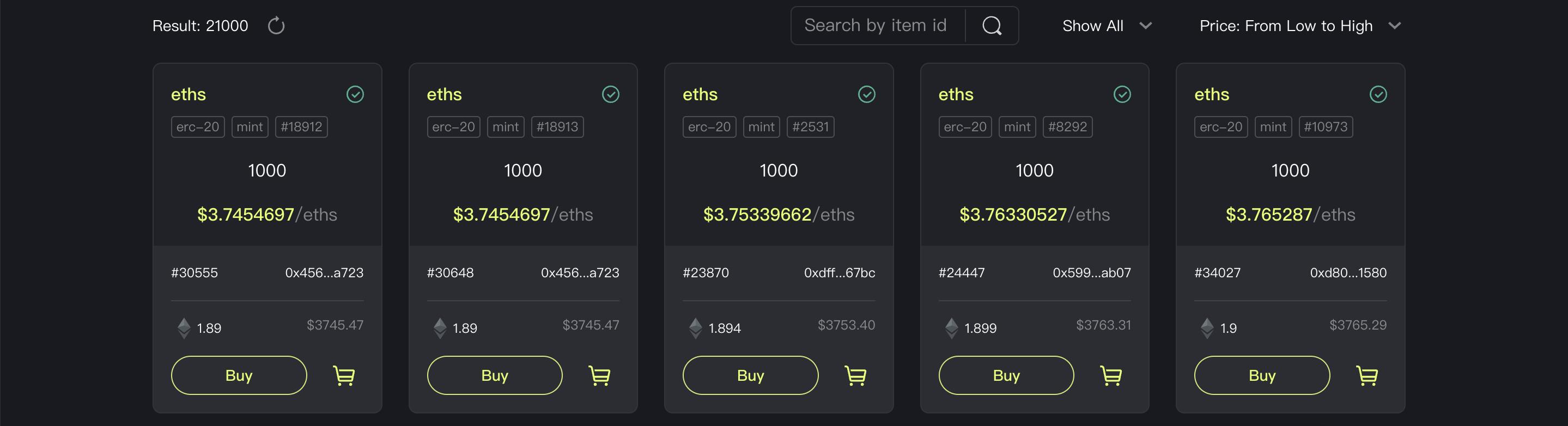

在 iERC20 生态中,Ethi 相当于铲子,这也是官方给予 Ethi 的特殊赋能,例如持有 Ethi 会有合作的项目的铭文的空投,例如近日合作的 SParkle,也给持有者空投了铭文:
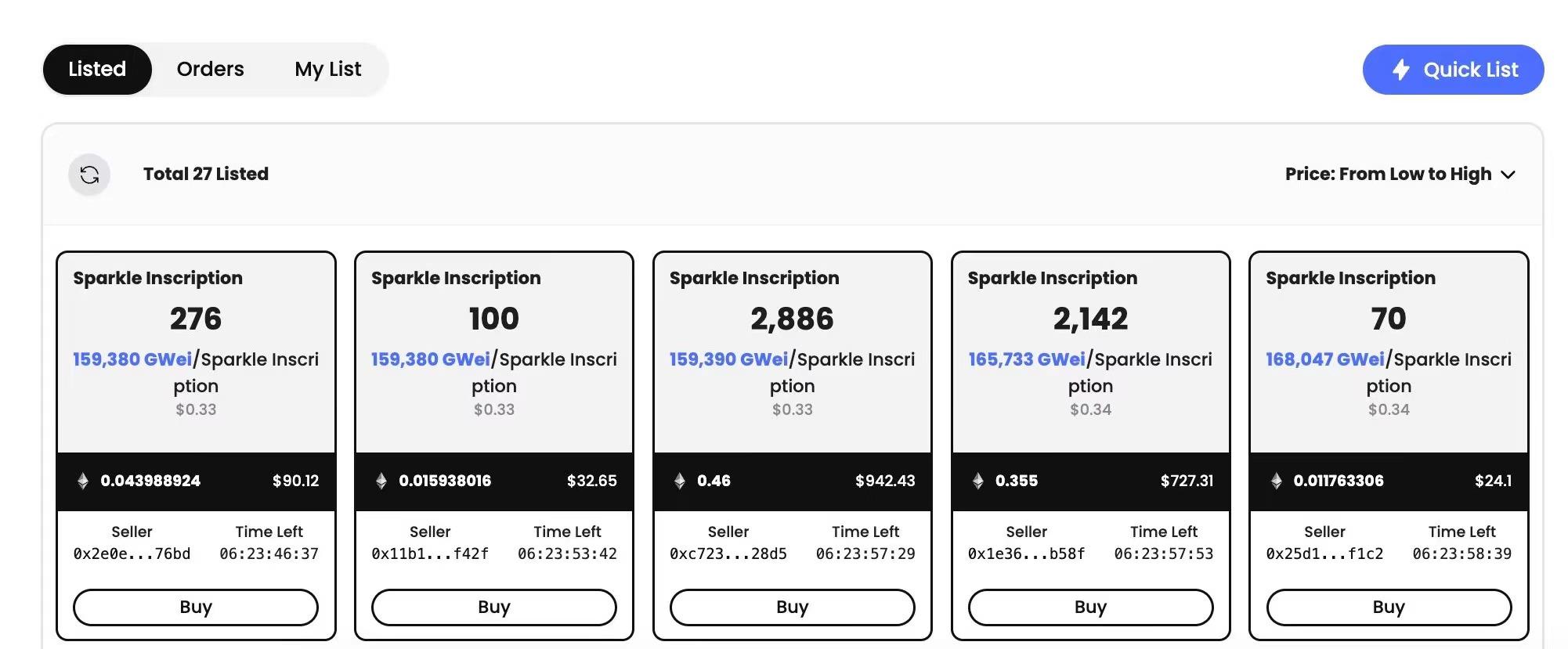

目前,不少铭文社区已开始FOMO,蠢蠢欲动,在鼓吹参与的投资者看来,目前有几个Ethi的利好因素:
1.IERC20官方认可的龙头;
2.ETHS 的踏空情绪蔓延到 Ethi,产生了 Fomo 效应,尤其是在ETHS 已经涨幅巨大的情况之下;
3.iERC20 生态中的金铲子,该赋能会给予 Ethi 底层价值,只要铭文生态还在,价值便不会消失;
4.PoW 机制上线。
深潮 TechFlow 是由社区驱动的深度内容平台,致力于提供有价值的信息,有态度的思考。
社区:
订阅频道:https://t.me/TechFlowDaily
推特:@TechFlowPost
进微信群添加助手微信:blocktheworld
If you find submirror valuable, please consider donate to wong2.eth to help cover server cost.
申明:本站所发布文章仅代表个人观点,不代表ChainXiu链嗅网立场。
提示:投资有风险,入市须谨慎。本资讯不作为投资理财建议。

相关推荐
-
How Far Can Decentralized Sequencers Go?
In Summary: Sequencers can address the scalability and performance limitations of the Ethereum network. They alleviate the burden on the Ethereum main chain by sorting and batch processing on-chain transactions, thus shifting most of the computational and data storage work to Layer 2. The decentralized sequencers’ capability ceiling depends on the underlying protocol and the network environment. While decentralized sequencers can improve the security and resilience of a system, there are still limitations and challenges.
Sequencers are a core component of rollup networks, responsible for crucial operations including receiving, sorting, and executing transactions, as well as submitting transaction data. If the only sequencer in a network fails or becomes unavailable, the whole network will stop processing transactions. However, many of the existing rollup solutions only have a single sequencer, making them far less decentralized than some centralized Layer1 alternatives. Therefore, the importance of decentralized sequencers is self-evident, and promising decentralized sequencers should effectively increase the decentralization of a network with optimized design and implementation.
Importance of Sequencers
Existing rollup solutions include zero-knowledge proofs (ZKPs) based zk-Rollups and optimistic execution-based Optimistic Rollups. These solutions are more scalable than monolithic Layer1s. But they still have their respective issues.
Issues with zk-Rollups:
-
Computational complexity: Using ZKPs to verify the correctness and legitimacy of transactions requires a significant amount of computational resources and time. This may result in transaction-processing delays and high computational costs.
-
Dependency on verifiability: Zk-Rollups rely on external verifiability, meaning that external supervisors are required to verify the correctness of ZK proofs. This may introduce trust issues and centralization risks.
Issues with Optimistic Rollups:
-
Reversibility: Optimistic Rollups work on an “optimistic” assumption that all transactions submitted are valid and conflict-free. However, if there are conflicts or invalid transactions, the entire system may have to roll back and re-execute, leading to uncertainties and processing delays.
-
MEV: Optimistic Rollups may face MEV (Maximal Extractable Value) issues, such as manipulated and unfair transaction ordering.
These issues reduce the performance and security of existing rollup solutions and may impact usability and user experience. The introduction of new designs like sequencers to improve the performance and decentralization of rollups is key to addressing these issues. Sequencers can increase throughput and compress transaction data. Specifically, they order transactions according to predetermined rules, which can not only enhance the efficiency and throughput of transaction processing but also reduce conflicts and competition among transactions. Sequencers also compress transactions, bundling multiple transactions into a single one, thereby reducing the scale of transaction data. Such compression helps reduce the costs for on-chain storage and transmission while improving the whole system’s efficiency.
Disadvantages of Centralized Sequencers
Most of the existing rollup service providers maintain their own centralized sequencers as it’s more convenient and cheaper. However, the disadvantages are also evident, including but not limited to susceptibility to censorship, excessive fees, and opportunities for capturing MEV maliciously.

Sequencer decentralization is considered an important direction for rollup maturing and a promising alternative to avoid the disadvantages of centralized sequencers. Decentralized sequencers are believed to offer more security, liveness, and censorship resistance. But they are not easy to design and implement. And the best solutions should make wise trade-offs among various factors, including performance, decentralization, and security.

Towards Decentralization
The current technology for decentralized sequencers is crude and can be improved by finding more effective ordering algorithms, implementing more robust validation mechanisms, creating smarter designs, etc. We’ve summarized below some meaningful decentralization approaches that are currently being explored. And as technology evolves, we expect decentralized sequencers to have higher throughput, faster confirmation speed, and lower latency as well as higher security and composability.
-
Proof-of-Authority (PoA): In this approach, a handful of entities are selected to take turns operating sequencers in a PoA system. The approach improves censorship resistance and has the lowest latency. But the drawback is it still faces the risk of single-point failure.
-
Based Sequencing: In this approach, there are no privileged sequencers, and anyone can submit batches to L2. Transaction ordering and block proposing are deferred to the Data Availability (DA) layer. The advantage is it inherits the liveness and censorship resistance of the DA layer. But the downside is the proceeds may leak to the base layer and it is more susceptible to MEV attacks. Also, the confirmation time is long.
-
Distributed Validator Technology (DVT): With DVT, the responsibilities of running a single sequencer can be distributed across a cluster of machines and node operators. Each node operator can sign independent attestations using their fractional share of the validator key. This approach offers the flexibility to be plugged into other solutions, but it introduces a little latency.
-
Shared Sequencing: This solution allows many rollups to share a single decentralized network of sequencers. This shared sequencer network processes transactions on several chains in parallel and provides cross-chain atomicity, real-time censorship resistance, and strong economic security at the sequencing layer. Shared sequencers have the network effect of serving multiple chains, but they are still limited by the L1’s data and transaction ordering throughput.
-
Bootstrapping New Sequencer Sets: This approach creates a decentralized sequencer group without permission using token incentive mechanisms. This approach involves creating a decentralized sequencer set permissionlessly by adopting token incentives. The advantage is increasing token utility, but the downsides are the latency and the difficulty of implementation for lesser-known rollups. Despite the benefits offered by decentralized sequencers, each technical approach has its own tradeoffs.

Potential Opportunities
Now, let’s take a step back and ask the question of whether decentralized sequencers can permanently solve Ethereum’s problems. Do they at the same time introduce hidden risks to Ethereum?
Firstly, for solutions that utilize the Ethereum L1 for sequencing such as based sequencing, the rollup system’s performance will be fundamentally limited by the throughput on L1 and can only alleviate computational bottlenecks and achieve small factor improvements in communication complexity.
Secondly, network conditions are also an important consideration. The stability and synchronicity of the network will directly impact the liveness and security of sequencers. Sequencers will lose liveness when the network behaves asynchronously and fail to respond to transactions timely. Only in networks with good synchronicity can sequencers maintain reliable liveness degrees.
Therefore, infrastructure could be a potential investment opportunity. That includes sequencer service providers, security auditors, cross-chain solution providers as well as governance and participation platforms, etc. The solutions offered by these infrastructure providers might solve the problems with existing decentralized sequencing approaches. But it should be noted that decentralized sequencing is only one possible direction that the Ethereum community is exploring to elevate performance and scalability. It’s not the only way. Also, new solutions will emerge as technology advances. We expect decentralized sequencing solutions to evolve in the following directions.
-
Multi-chain Interoperability: With the emergence of various blockchains and Layer 2 solutions, multi-chain interoperability could become an essential aspect of decentralized sequencers. Future sequencers may need to handle transactions across multiple chains simultaneously and achieve atomic composability to provide smoother user experiences and more powerful functionalities.
-
Stronger MEV Prevention and User Protection: Future sequencers would be able to reduce the impact of MEV and better protect users against monopoly pricing. This may include adopting random ordering mechanisms, reasonable transaction fee mechanisms, and improved privacy protection measures.
-
Enhanced Governance and Participation: To ensure the fairness and security of decentralized sequencers, future sequencers may introduce stronger governance and participation mechanisms. This can be achieved through token holder voting, validator elections, and decentralized decision-making by participants. More open and transparent governance mechanisms can promote community participation and drive the development of the system.
In conclusion, as decentralized sequencers continue to evolve, we expect to see more business model innovations. These may include different transaction fee models and sequencer-based data services and on-chain applications, and more. Innovative business models will provide more economic incentives for sequencers, thereby promoting their widespread adoption and sustainable development.
About Bing Ventures
With a team of veteran financial professionals, researchers, and technologists, Bing Ventures is a pioneering venture capital firm that backs startups and entrepreneurs driving the next wave of Web3 and blockchain innovations.
For more information, please visit us at the following channels:
Website: https://www.bing-ventures.com/
Twitter: https://twitter.com/BingVentures
Medium: https://medium.com/@BingVentures
Telegram: https://t.me/Bing_Ventures
If you find submirror valuable, please consider donate to wong2.eth to help cover server cost.
-
-
11家韩国公司将提供基于区块链的身份认证服务
由11家韩国公司组成的财团(包括三星电子公司)表示,将商业化基于区块链的移动识别和认证服务,使用户能够安全地处理其个人信息。
-
区块链引热议!20余位两会代表委员提交区块链产业相关建议(附建议内容)
对于区块链来说,今年的全国两会尤为特殊,因为在去年10月区块链被“正名”后,有关区块链的议案终于登上了全国两会的舞台。